
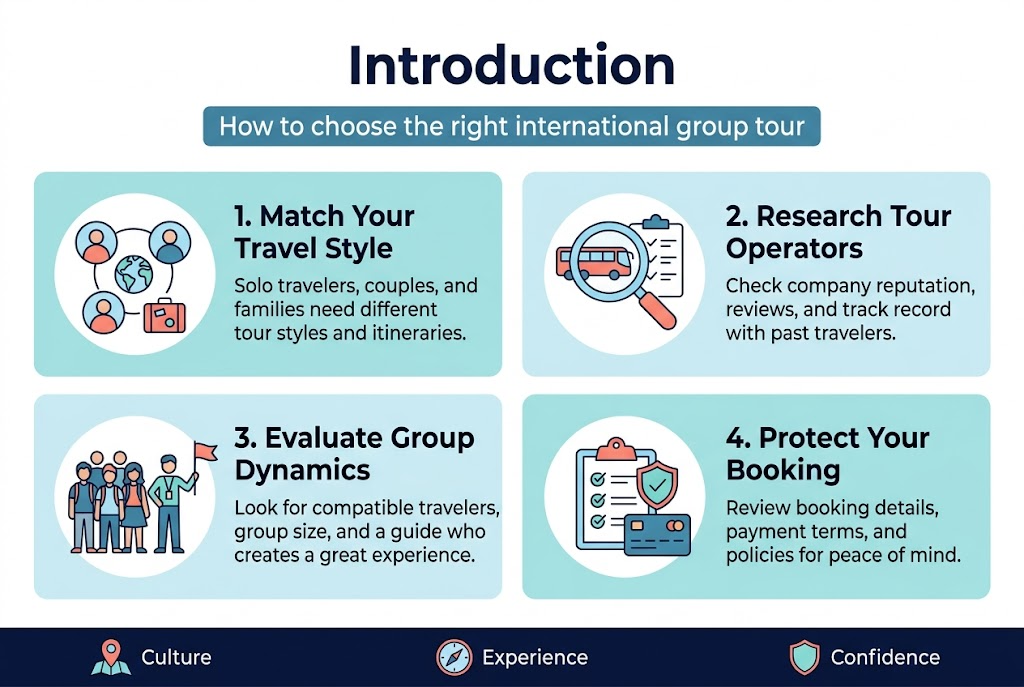
Choosing the right international group tour can make or break your travel experience. This guide helps solo travelers, couples, and families who want to explore the world with like-minded people while avoiding common booking mistakes.
Finding the perfect group tour means matching your travel style with the right company and itinerary. We'll walk you through how to research tour operators and check their track record with past travelers. You'll also learn to evaluate group dynamics and tour guide quality to ensure your trip delivers the authentic cultural experiences you're seeking. Finally, we'll cover the booking details that protect your investment and give you peace of mind.
Determine Your Travel Preferences and Goals
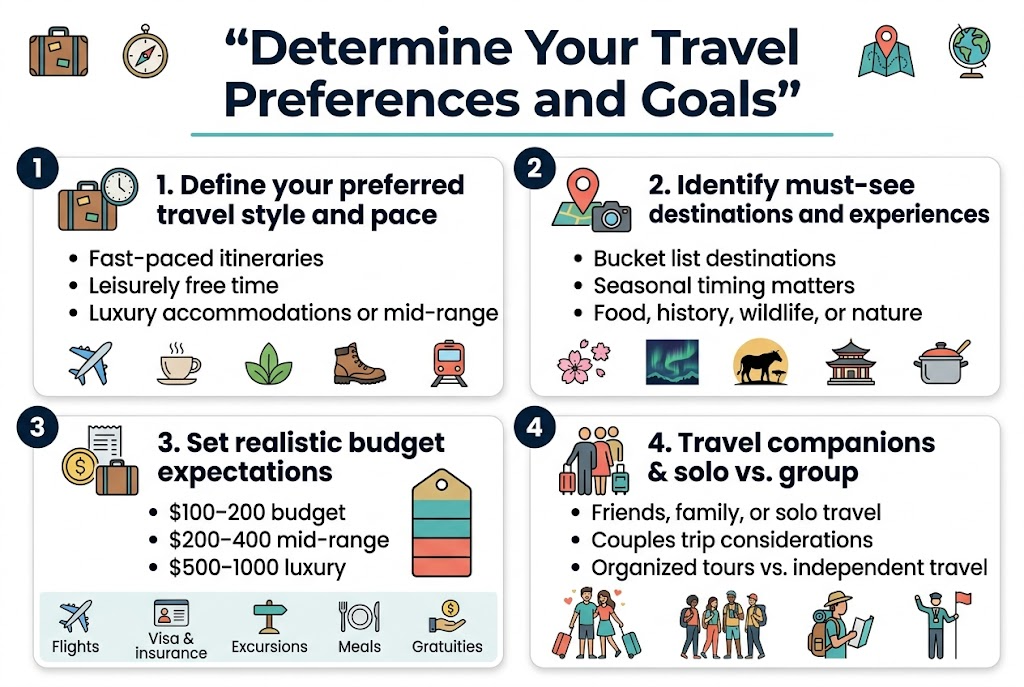
Define your preferred travel style and pace
Your travel style shapes every moment of your international group tour experience. Some people love jam-packed itineraries with early morning starts and multiple destinations each day, while others prefer a leisurely approach with plenty of free time to explore independently. Think about your past travel experiences - did you enjoy rushing from monument to monument, or did you prefer lingering at cafes and people-watching?
Consider whether you're drawn to luxury accommodations with premium amenities or if you're comfortable with mid-range hotels that offer clean, basic facilities. Your accommodation preferences directly impact both your daily comfort and overall budget. Adventure seekers might prioritize tours that include hiking, water sports, or cultural immersion activities, while relaxation-focused travelers may want more spa time, beach days, or scenic train rides.
The pace question becomes especially important on group tours since you'll be moving with others. Fast-paced tours typically cover more ground but allow less flexibility for spontaneous discoveries. Slower-paced tours offer deeper cultural connections but might mean missing some destinations on your wishlist.
Identify must-see destinations and experiences
Creating your destination and experience wishlist helps narrow down tour options significantly. Start by listing your absolute must-see places - those bucket list destinations you've dreamed about for years. Then add experiences that matter most to you, whether that's cooking classes in Tuscany, wildlife safaris in Kenya, or temple visits in Cambodia.
Research seasonal considerations for your target destinations. Cherry blossom season in Japan, Northern Lights in Iceland, or dry season for African safaris all impact timing and availability. Some tours only operate during specific months, while others offer different experiences depending on when you travel.
Think beyond the obvious tourist attractions. Do you want authentic local interactions, historical deep dives, culinary adventures, or natural wonders? Group tours often specialize in particular types of experiences, so knowing your priorities helps you choose between a food-focused tour of Vietnam versus a history-centered journey through Greece.
Set realistic budget expectations
International group tour pricing varies dramatically based on destination, duration, accommodation level, and included services. Budget tours might range from $100-200 per day, mid-range options typically cost $200-400 daily, while luxury experiences can exceed $500-1000 per day.
Beyond the base tour price, factor in additional costs that add up quickly:
-
International flights (often not included)
-
Visa fees and travel insurance
-
Optional excursions and upgrades
-
Meals not included in the tour
-
Personal shopping and souvenirs
-
Gratuities for guides and drivers
-
Pre and post-tour accommodation if needed
Compare what's actually included across different tour companies. Some "budget" tours exclude many meals and activities, making them more expensive than initially advertised. Others offer comprehensive packages that provide better value despite higher upfront costs.
Consider your physical fitness and mobility requirements
Honest self-assessment of your physical capabilities prevents disappointment and safety issues during your tour. Many international destinations involve significant walking on uneven surfaces, stairs without railings, and extended periods standing in museums or outdoor sites.
Group tours often include walking tours lasting 2-4 hours, hiking to viewpoints, climbing temple steps, or navigating cobblestone streets with luggage. Read tour descriptions carefully for phrases like "moderate walking," "some hiking required," or "extensive walking tours" - these indicate physical demands you'll encounter daily.
Age and fitness levels within your tour group matter too. Tours marketed to active travelers typically attract younger, more physically capable participants who move at faster paces. Senior-focused or accessible tours accommodate mobility devices and include transportation between sites rather than walking.
Climate considerations also impact physical comfort. High altitude destinations, extremely hot or cold weather, and humid conditions all affect how challenging daily activities become. Choose tours that match both your fitness level and comfort with various weather conditions.
Research Tour Companies and Their Reputation
Check Online Reviews and Testimonials from Past Travelers
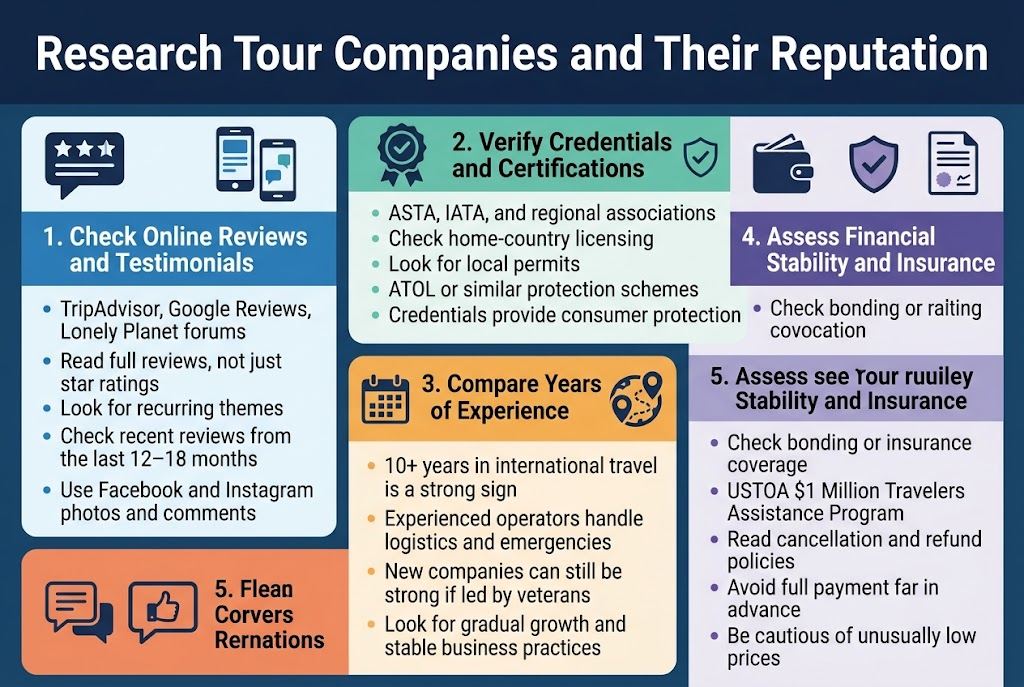
Start your research by diving deep into reviews across multiple platforms. TripAdvisor, Google Reviews, and specialized travel forums like Lonely Planet's Thorn Tree provide authentic feedback from real travelers. Pay attention to recurring themes in reviews rather than isolated complaints. Look for specific details about accommodations, transportation quality, and how well the company handled unexpected situations.
Don't stop at star ratings – read the full reviews to understand context. A three-star review might highlight excellent guides but poor hotel choices, giving you valuable insight into the company's priorities. Check recent reviews (within the past 12-18 months) since tour operators can change significantly over time. Social media platforms like Facebook and Instagram also offer candid traveler photos and comments that reveal the reality behind marketing materials.
Verify Company Credentials and Industry Certifications
Professional tour operators maintain memberships with recognized industry associations. Look for affiliations with organizations like the American Society of Travel Advisors (ASTA), International Air Transport Association (IATA), or regional equivalents. These memberships require operators to meet specific standards and provide consumer protection.
Check if the company holds proper licensing in their home country. Many destinations require tour operators to maintain local permits and certifications. Companies operating in Europe should display ATOL (Air Travel Organiser's License) or similar consumer protection schemes. These credentials aren't just paperwork – they demonstrate the company's commitment to professional standards and provide you with recourse if things go wrong.
Compare Years of Experience in International Travel
Experience matters when dealing with complex international logistics. Companies with 10+ years in business have weathered various challenges, from natural disasters to political changes. They've built relationships with local suppliers, understand seasonal variations, and know how to handle emergencies effectively.
However, don't automatically dismiss newer companies. Some are founded by industry veterans who bring decades of experience from larger operators. Research the leadership team's background – a new company led by seasoned professionals might offer fresh perspectives with established expertise. Look for evidence of gradual growth rather than rapid expansion, which often indicates sustainable business practices.
Assess Financial Stability and Insurance Coverage
Financial stability protects your investment and ensures the company can deliver promised services. Check if the operator provides financial protection through bonding or insurance schemes. In the US, look for participation in programs like the United States Tour Operators Association (USTOA) $1 Million Travelers Assistance Program.
Request information about their cancellation and refund policies during different scenarios. Financially stable companies typically offer clear, fair policies and don't require full payment months in advance. Be wary of operators demanding immediate full payment or offering suspiciously low prices – these can indicate financial stress that might affect your trip quality.
Evaluate Customer Service Responsiveness
Test their customer service before booking by asking detailed questions about itineraries, accommodations, or policies. Note response times and the quality of information provided. Professional operators respond within 24-48 hours with comprehensive, helpful answers. Their communication style should be friendly yet professional, addressing your concerns without high-pressure sales tactics.
During peak booking seasons, response times might be longer, but the quality should remain consistent. Check if they provide multiple contact methods (phone, email, chat) and whether they offer support during your trip. Companies with 24/7 emergency contact numbers demonstrate serious commitment to traveler support.
Analyze Group Size and Demographics
Choose between small intimate groups or larger social experiences
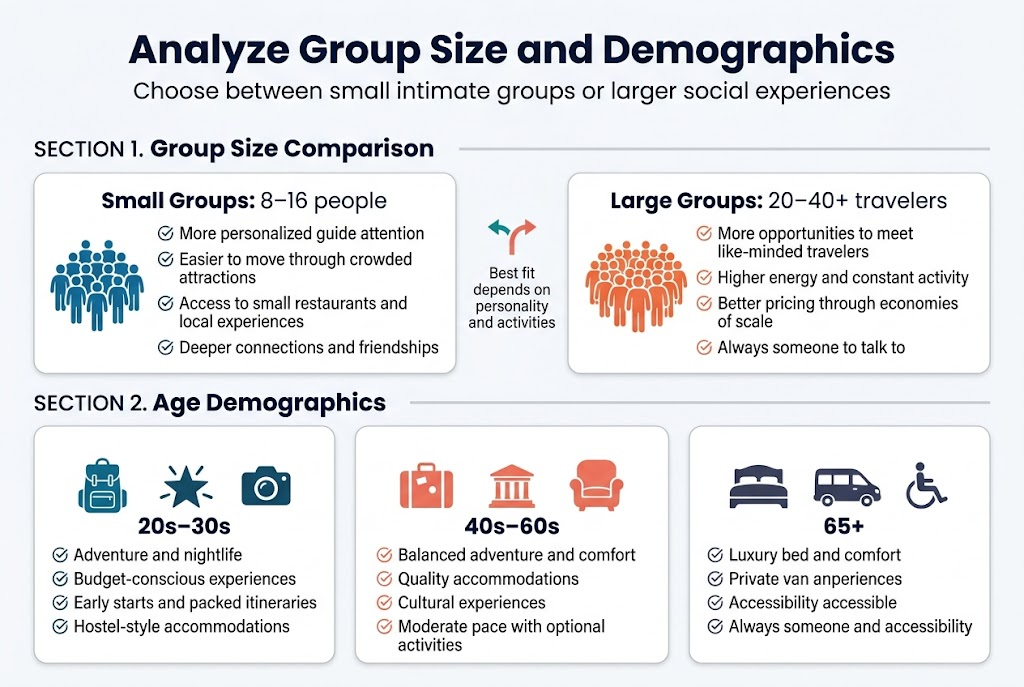
Small group tours typically range from 8-16 people, while larger groups can include 20-40 travelers or more. Each option creates a completely different travel dynamic that can make or break your experience.
Small groups offer several clear advantages. You'll get more personalized attention from your guide, who can answer questions directly and adjust the pace based on group preferences. Moving through crowded attractions becomes easier, and you can access smaller restaurants and local experiences that can't accommodate massive groups. The intimate setting encourages deeper connections with fellow travelers, and you'll often find yourself forming genuine friendships that extend beyond the trip.
Larger groups bring their own benefits, particularly for social butterflies who thrive in bustling environments. You'll have more opportunities to find like-minded travelers with similar interests or backgrounds. The energy level tends to be higher, with more conversation and activity at all times. Larger groups also mean better pricing due to economies of scale, and there's always someone to talk to if you don't click with certain group members.
Consider your personality type when making this decision. Introverts often prefer smaller groups where they can form meaningful connections without feeling overwhelmed. Extroverts might enjoy the variety and energy that larger groups provide. Also think about the activities you'll be doing - hiking and cultural experiences work well with small groups, while city tours and sightseeing can be perfectly enjoyable with larger numbers.
Consider age ranges that match your preferences
Age demographics significantly impact group dynamics, energy levels, and activity preferences. Most tour companies target specific age ranges, though some welcome all ages while others maintain strict age requirements.
Tours targeting travelers in their 20s and 30s typically focus on adventure, nightlife, and budget-conscious experiences. Expect early morning starts, packed itineraries, hostel-style accommodations, and plenty of optional evening activities. These trips often emphasize social aspects and Instagram-worthy moments over luxury amenities.
Groups catering to travelers aged 40-60 usually balance adventure with comfort. You'll find moderately paced itineraries with quality accommodations, cultural experiences, and optional activities that don't require extreme physical fitness. The group dynamic tends to be more relaxed, with meaningful conversations and shared interests in history, food, and local culture.
Senior-focused tours (65+) prioritize comfort, convenience, and accessibility. Expect luxury accommodations, private transportation, slower paces with built-in rest periods, and carefully selected activities that accommodate various mobility levels. These groups often appreciate expert guides who can provide detailed historical and cultural context.
Mixed-age groups can work beautifully when everyone shares similar interests and travel styles. However, conflicts can arise when younger travelers want to party while older participants prefer quiet evenings, or when fitness levels vary dramatically during physical activities.
Review typical traveler profiles and interests
Understanding who typically joins specific tours helps you gauge compatibility with potential travel companions. Tour companies often develop reputations for attracting certain types of travelers based on their marketing, pricing, and trip styles.
Budget-friendly tours attract cost-conscious travelers, including recent graduates, career changers, and anyone prioritizing experiences over luxury. These groups often include solo travelers, couples seeking adventure, and people comfortable with basic accommodations and packed schedules.
Mid-range tours appeal to working professionals, families with older children, and travelers who want comfort without breaking the bank. You'll typically find people with established careers, couples celebrating anniversaries or milestones, and friend groups taking their first international adventure together.
Luxury tours attract affluent travelers who prioritize convenience, exclusivity, and premium experiences. These groups often include retirees with disposable income, successful professionals, and travelers celebrating special occasions who want everything handled seamlessly.
Adventure-focused tours draw active individuals regardless of age, including outdoor enthusiasts, fitness buffs, and people seeking physical challenges. Photography tours attract serious hobbyists and professionals, while cultural immersion trips appeal to curious travelers who want authentic local experiences rather than typical tourist attractions.
Reading tour reviews and company testimonials reveals valuable insights about typical group composition, helping you determine if you'll fit in with the crowd.
Evaluate Itinerary Details and Value
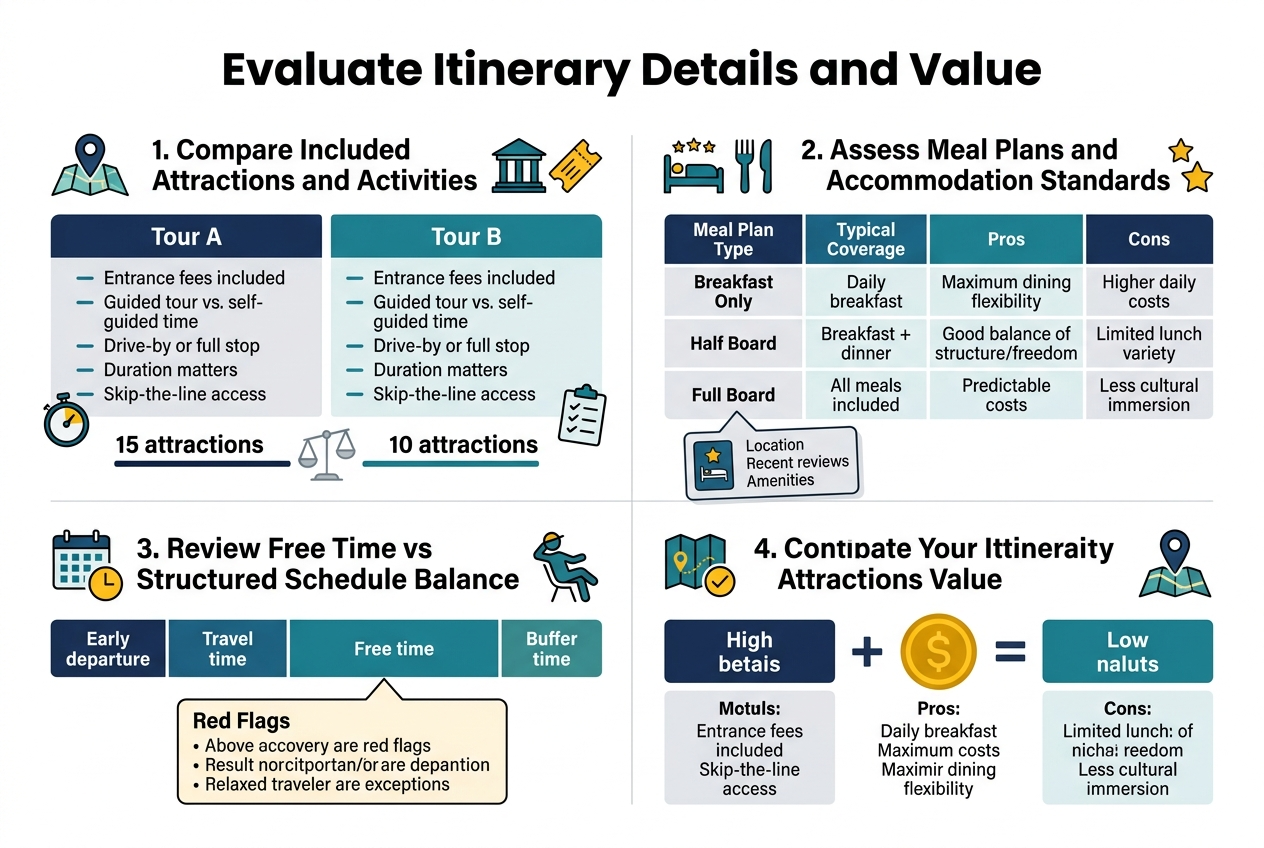
Compare included attractions and activities
The devil's in the details when examining what's actually covered in your tour package. Smart travelers dig deep into attraction listings rather than getting swept away by flashy marketing photos. Look for specific entrance fees, guided tours versus self-exploration time, and whether popular must-see sites are genuinely included or just mentioned as "drive-by" experiences.
Pay close attention to activity descriptions. "Visit the Louvre" could mean anything from a rushed 30-minute walk-through to a comprehensive 3-hour guided experience. Quality tours specify duration, guide expertise, and whether you'll have time to actually appreciate what you're seeing. Check if major attractions require advance booking or if your tour company has secured skip-the-line access.
Compare similar tours side-by-side using a simple list format. Tour A might include 15 attractions while Tour B covers only 10, but Tour B's attractions might offer deeper, more meaningful experiences. Quantity doesn't always win over quality.
Assess meal plans and accommodation standards
Accommodation and dining can make or break your travel experience, yet many travelers gloss over these details until it's too late. Research the actual hotels listed in your itinerary - not just their star ratings, but recent guest reviews, location convenience, and amenities. A 4-star hotel in a remote area might be less valuable than a well-located 3-star property.
Meal inclusions vary dramatically between tour companies. Some offer elaborate local cuisine experiences, while others stick to basic buffet breakfasts and tourist-friendly restaurants. Check exactly how many meals are included and what type of dining experiences you can expect.
| Meal Plan Type | Typical Coverage | Pros | Cons |
|---|---|---|---|
| Breakfast Only | Daily breakfast | Maximum dining flexibility | Higher daily costs |
| Half Board | Breakfast + dinner | Good balance of structure/freedom | Limited lunch variety |
| Full Board | All meals included | Predictable costs | Less cultural immersion |
Look for tours that balance convenience with authentic local dining opportunities. The best packages include some group meals for bonding while leaving room for independent culinary exploration.
Review free time versus structured schedule balance
Your ideal tour balance depends entirely on your travel personality. Some people crave every moment planned and organized, while others feel suffocated by rigid itineraries. Examine daily schedules carefully to understand how much genuine free time you'll have.
Beware of "free afternoon" descriptions that actually mean "free time after a 6-hour bus ride to the next city." Quality free time should be in interesting locations where you can actually explore, shop, or relax. Check if free time aligns with local business hours and cultural activities.
Consider these schedule red flags:
-
Back-to-back early morning departures
-
Long travel days with minimal rest stops
-
Free time only in transit cities or hotel areas
-
Rushed timing that doesn't account for real travel delays
The best tours build in buffer time for unexpected discoveries and spontaneous moments that often become trip highlights.
Calculate hidden costs and optional extras
Tour pricing can be misleading when companies bury significant costs in fine print. Create a realistic budget by identifying every potential additional expense before booking. Standard hidden costs include visa fees, departure taxes, gratuities for guides and drivers, and travel insurance.
Optional excursions deserve special scrutiny. While these extras can enhance your experience, they're often overpriced compared to booking independently. Research local pricing for activities like sunset cruises, cooking classes, or cultural performances to gauge whether tour company markups are reasonable.
Watch for pressure tactics around optional activities. Reputable companies present choices without making non-participants feel excluded or bored. If most optional activities happen during designated "free time," you're essentially paying extra for experiences you thought were included.
Factor in daily spending money for personal purchases, snacks, drinks, and spontaneous activities. A good rule of thumb: budget 20-30% above the base tour cost for a comfortable experience with some splurges.
Examine Tour Guide Quality and Support
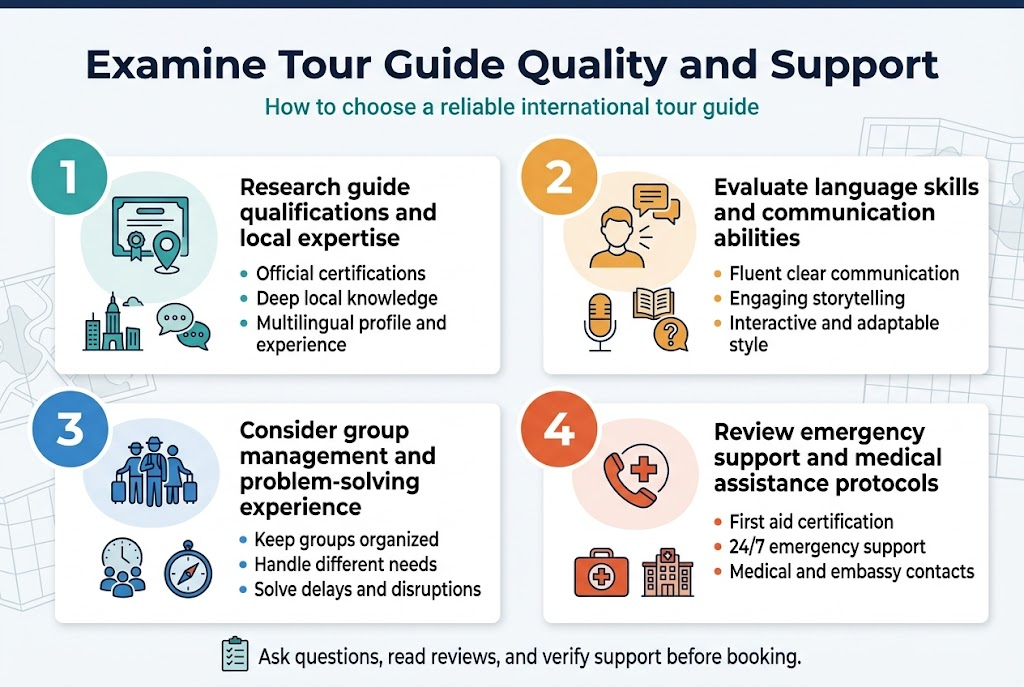
Research guide qualifications and local expertise
Your tour guide can make or break your entire international experience. Start by digging into their background and credentials. Look for guides who hold official certifications from recognized tourism boards or cultural institutions in your destination country. Many professional guides complete extensive training programs that cover everything from local history and customs to first aid and crisis management.
Pay special attention to guides with deep local connections. A guide who grew up in Rome will offer insights that someone who simply studied the city from textbooks never could. They know which gelato shop the locals actually visit, understand the cultural nuances behind seemingly simple traditions, and can navigate unexpected situations with ease.
Check if your potential guide speaks multiple languages fluently and has experience working with international visitors. Some tour companies provide detailed guide profiles on their websites, including educational backgrounds, years of experience, and specialized knowledge areas. Don't hesitate to ask about specific qualifications when speaking with tour operators.
Evaluate language skills and communication abilities
Clear communication forms the foundation of any successful group tour. Your guide should speak your language fluently enough to explain complex historical concepts, cultural practices, and logistical details without confusion. Poor language skills can lead to missed opportunities, misunderstandings about meeting times or locations, and frustration for the entire group.
Beyond basic fluency, assess their teaching and storytelling abilities. Great guides transform dry historical facts into engaging narratives that stick with you long after the trip ends. They should be able to adjust their communication style for different learning preferences and age groups within your tour.
Look for guides who actively engage with the group rather than simply reciting memorized scripts. The best guides encourage questions, create interactive experiences, and adapt their presentations based on group interests. Reading recent tour reviews can give you valuable insights into a guide's communication style and effectiveness.
Consider group management and problem-solving experience
Managing a group of travelers from different backgrounds requires specific skills that not all guides possess. Experienced guides know how to keep everyone together in crowded areas, manage different walking paces, and handle personality conflicts that might arise during extended travel periods.
Look for evidence of strong organizational abilities. Skilled guides maintain realistic schedules, account for bathroom breaks and rest periods, and keep track of group members without making anyone feel rushed or forgotten. They should demonstrate patience when dealing with varying fitness levels, dietary restrictions, and individual needs.
Problem-solving experience becomes crucial when unexpected situations arise. Weather changes, transportation delays, closed attractions, or lost luggage all require quick thinking and creative solutions. Guides with years of experience have usually encountered most common travel challenges and developed effective strategies for handling them while maintaining group morale.
Review emergency support and medical assistance protocols
Safety should be your top priority when choosing any international tour. Verify that your guide and tour company have comprehensive emergency procedures in place. This includes access to local medical facilities, relationships with hospitals that serve international patients, and clear protocols for contacting embassies or consular services when needed.
Ask about the guide's first aid certification and emergency training. While they shouldn't replace medical professionals, guides should know basic first aid, understand how to recognize serious medical conditions, and know exactly who to contact in different types of emergencies.
The tour company should provide 24/7 emergency support, either through your guide or a dedicated emergency hotline. This support system becomes especially important in countries where language barriers might complicate medical care or legal assistance. Review their track record for handling emergencies and ask for specific examples of how they've assisted travelers in challenging situations.
Review Booking Terms and Flexibility Options
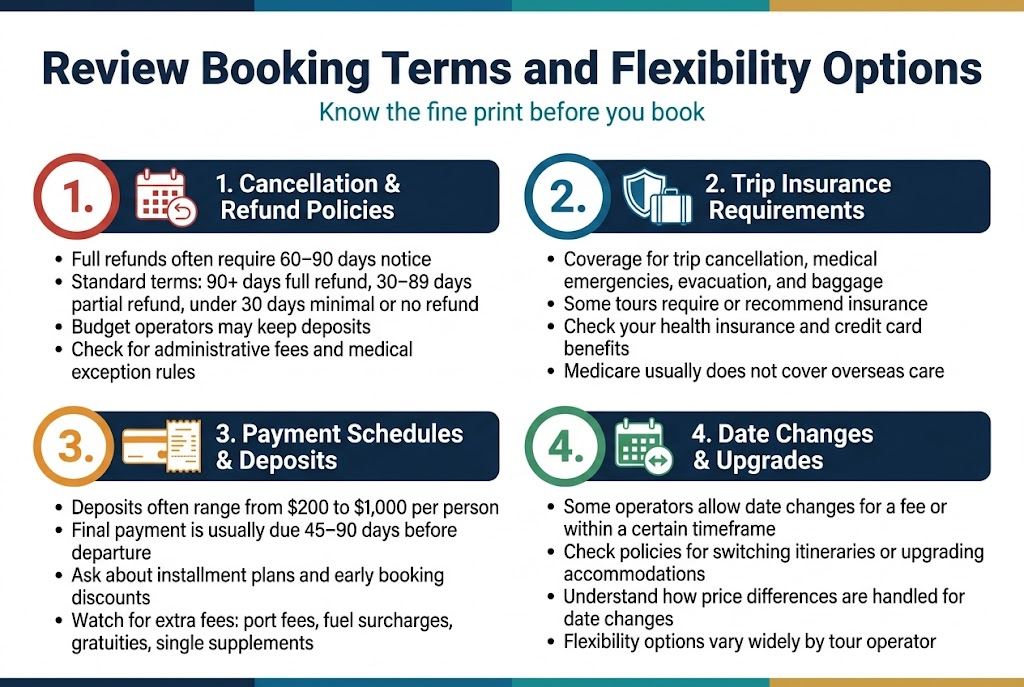
Understand cancellation and refund policies
Smart travelers always check the fine print before committing to any tour package. Cancellation policies vary dramatically between companies, and some can be surprisingly restrictive. Most tour operators require cancellations 60-90 days before departure for full refunds, but budget companies might keep your deposit regardless of timing.
Pay attention to the difference between "cancel for any reason" policies versus standard cancellation terms. Standard policies typically offer full refunds for cancellations made 90+ days out, partial refunds for 30-89 days, and minimal to no refunds within 30 days of departure. Some operators charge administrative fees even for early cancellations.
Read the policy carefully for medical emergency exceptions. Quality tour companies often provide more flexible terms if you can provide doctor's documentation, but don't assume this coverage exists without verifying the specific requirements and limitations.
Assess trip insurance requirements and recommendations
Many tour operators strongly recommend or require travel insurance, and this isn't just a sales tactic. International group tours involve complex logistics, multiple vendors, and significant upfront costs that standard cancellation policies don't always cover.
Look for insurance that covers trip cancellation, medical emergencies abroad, evacuation coverage, and baggage protection. Some tour companies partner with specific insurance providers and offer group rates, which can save money while ensuring coverage aligns with tour requirements.
Check if your existing health insurance covers international travel and what gaps might exist. Medicare doesn't cover overseas medical expenses, and many domestic policies have limited international coverage. Credit card travel benefits might provide some protection, but rarely match comprehensive travel insurance.
Evaluate payment schedules and deposit terms
Tour companies typically require deposits ranging from $200 to $1,000 per person, with final payment due 45-90 days before departure. Luxury and adventure tours often demand higher deposits and earlier final payments due to specialized accommodations and activities requiring advance bookings.
Compare payment schedules between operators. Some allow installment plans or monthly payments, which can make expensive tours more manageable. Others offer early booking discounts for full payment made months in advance.
Watch for additional fees that might not be included in advertised prices. Port fees, fuel surcharges, gratuities, and single supplement charges can add hundreds to your final bill. Ask for a comprehensive breakdown of all potential costs upfront.
Consider date change and upgrade possibilities
Life happens, and flexible booking terms can save significant stress and money. Some tour operators allow date changes within the same tour year for modest fees ($50-150 per person), while others treat date changes as cancellations requiring full rebooking.
Ask about upgrade opportunities once you've booked. Many companies offer room upgrades, extended stays, or additional excursions closer to departure dates, sometimes at discounted rates. Knowing these options exist helps you book a base package and customize later.
Check policies for group size changes or tour modifications. Operators sometimes cancel departures due to low enrollment or modify itineraries due to local conditions. Understanding your options in these scenarios protects your vacation investment and helps you make informed backup plans.
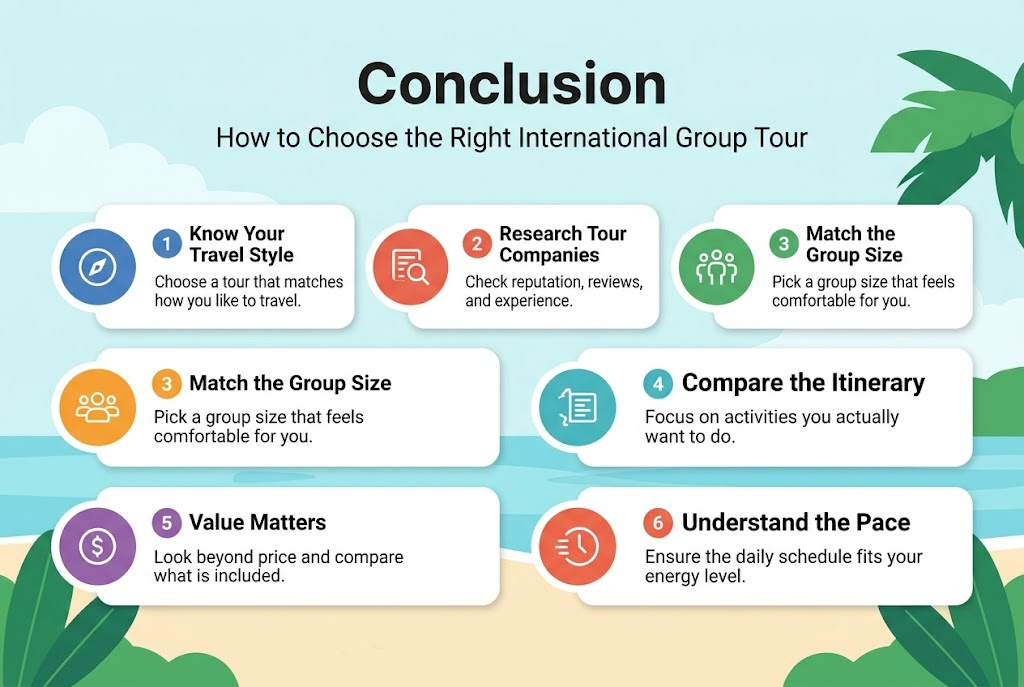
Picking the right international group tour comes down to knowing what you want from your trip and doing your homework on tour companies. Take time to think about your travel style, research company reputations, and pay close attention to group sizes that match your comfort level. The itinerary details matter just as much as the price tag, so make sure you're getting good value for activities that actually interest you.
Don't overlook the human element – quality tour guides can make or break your experience, and solid customer support gives you peace of mind when you're far from home. Before you book, read through all the terms carefully and understand what flexibility you have if plans need to change. Start comparing tour options now, and you'll be well on your way to an amazing international adventure that fits exactly what you're looking for.
Post a Comment