
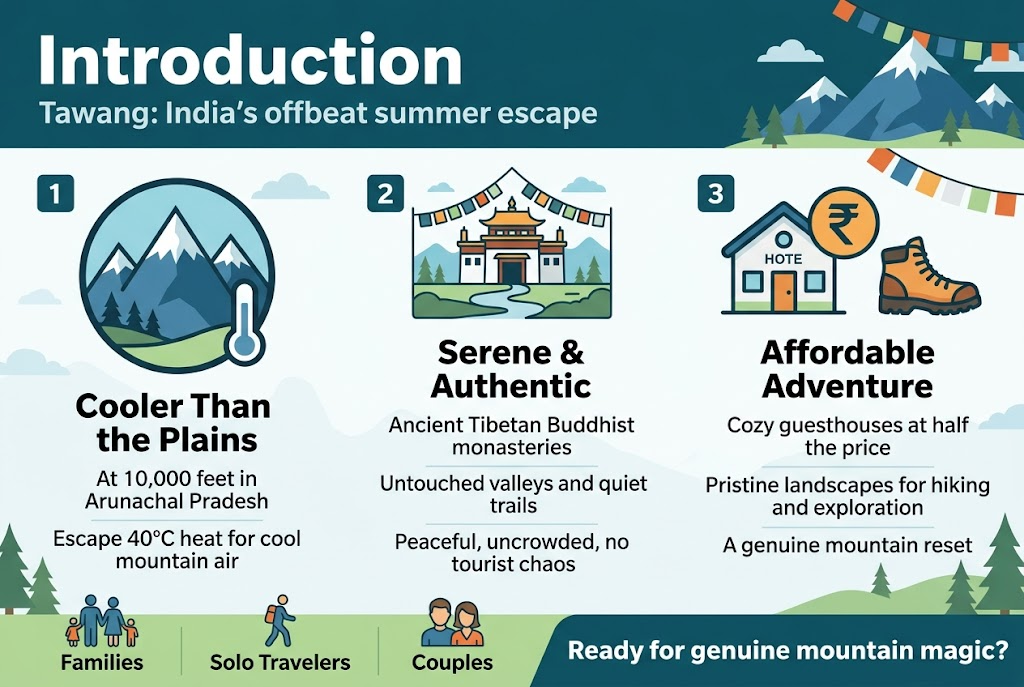
Most travelers stick to the same crowded hill stations every summer, but smart adventure seekers are discovering Tawang as the ultimate offbeat summer destination in India's northeast. This hidden gem offers cool mountain temperatures when plains cities hit 40°C, making it the perfect escape for families, solo travelers, and couples seeking an uncrowded summer destination away from tourist chaos.
Located at 10,000 feet in Arunachal Pradesh, this peaceful mountain retreat delivers everything mainstream hill stations promise but can't deliver anymore – authentic experiences without selfie sticks everywhere. You'll find yourself exploring ancient Tibetan Buddhist monasteries in complete serenity, hiking through untouched valleys where your footsteps might be the only sounds for hours, and staying in cozy guesthouses for half the price of popular mountain destinations.
We'll show you how Tawang's cool mountain getaway summer climate beats any AC, reveal the adventure activities waiting in pristine landscapes most Indians haven't even heard of, and explain why this high altitude summer destination offers the mental reset your burned-out mind desperately needs. Ready to trade tourist traps for genuine mountain magic?
Escape the Summer Heat in Cool Mountain Climate
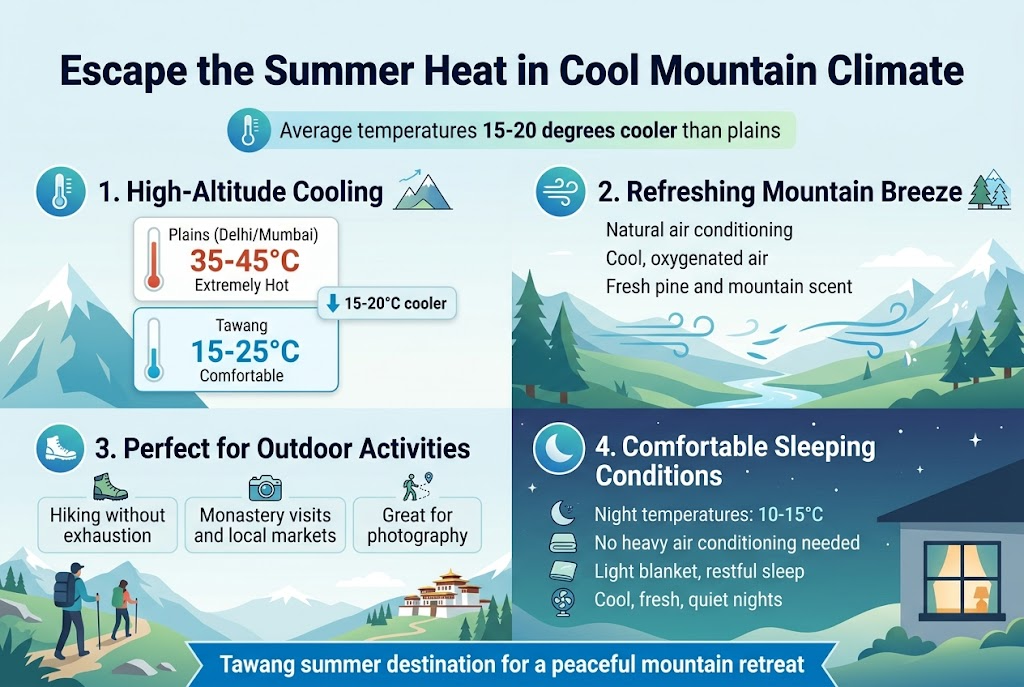
Average temperatures 15-20 degrees cooler than plains
Tawang sits at an impressive altitude of 10,000 feet, which naturally translates to a dramatic drop in temperature compared to the sweltering plains below. While cities like Delhi and Mumbai struggle with temperatures soaring above 40°C during summer months, this cool mountain getaway summer destination maintains a comfortable range between 15-25°C. The temperature difference becomes even more pronounced during peak summer when the contrast can reach up to 20 degrees.
This significant cooling effect makes Tawang an ideal Tawang summer destination for those seeking refuge from India's notorious heat waves. The high-altitude location ensures that even the warmest days remain pleasant, with temperatures rarely crossing the uncomfortable threshold that characterizes most Indian summers.
| Location Type | Summer Temperature Range | Comfort Level |
|---|---|---|
| Plains (Delhi/Mumbai) | 35-45°C | Extremely Hot |
| Tawang | 15-25°C | Comfortable |
| Temperature Difference | 15-20°C cooler | Significant Relief |
Refreshing mountain breeze provides natural air conditioning
The constant mountain breeze that flows through Tawang's valleys acts like nature's own cooling system. These gentle winds carry the crisp, clean air from snow-capped peaks and glacial streams, creating a naturally refrigerated environment that feels incredibly refreshing against sun-warmed skin.
Unlike the stagnant, humid air that traps heat in urban areas, Tawang's air circulation patterns ensure continuous movement of cool, oxygenated air. The breeze picks up moisture from nearby streams and valleys, adding a pleasant humidity that feels refreshing rather than oppressive. This natural ventilation system works around the clock, making even the warmest afternoons bearable and nights genuinely cool.
The mountain winds also carry the fresh scent of pine forests, alpine flowers, and clean mountain streams, creating an aromatherapy experience that urban air conditioners simply cannot replicate.
Perfect weather for outdoor activities without exhaustion
Tawang's moderate temperatures create ideal conditions for exploring this offbeat hill stations India gem without the fatigue that comes with extreme heat. Hiking trails become enjoyable adventures rather than endurance tests, allowing visitors to fully appreciate the stunning landscapes without constantly seeking shade or water breaks.
The comfortable climate means you can spend entire days outdoors - whether trekking to remote monasteries, exploring local markets, or simply walking through the town - without feeling drained by oppressive heat. Photography enthusiasts particularly benefit from these conditions, as they can spend hours capturing the perfect shots without equipment overheating or personal discomfort affecting their focus.
Even strenuous activities like monastery visits involving steep climbs become manageable when you're not battling both altitude and extreme temperatures simultaneously.
Comfortable sleeping conditions without heavy air conditioning
Nights in Tawang naturally cool down to a pleasant 10-15°C, eliminating the need for energy-intensive air conditioning systems that dominate summer accommodation costs elsewhere. Most guesthouses and hotels rely on simple fans or natural ventilation, which not only reduces accommodation expenses but also provides a more restful sleep environment.
The cool mountain air creates perfect sleeping conditions - cool enough to require a light blanket, but never uncomfortably cold. This natural temperature regulation helps maintain healthy sleep cycles, unlike the artificially cooled environments of air-conditioned rooms that can leave you feeling groggy or dehydrated.
Many travelers report sleeping better in Tawang than they have in months, thanks to the combination of cool, fresh air, reduced humidity, and the natural quiet that comes with this peaceful mountain retreat location.
Discover Breathtaking High-Altitude Landscapes
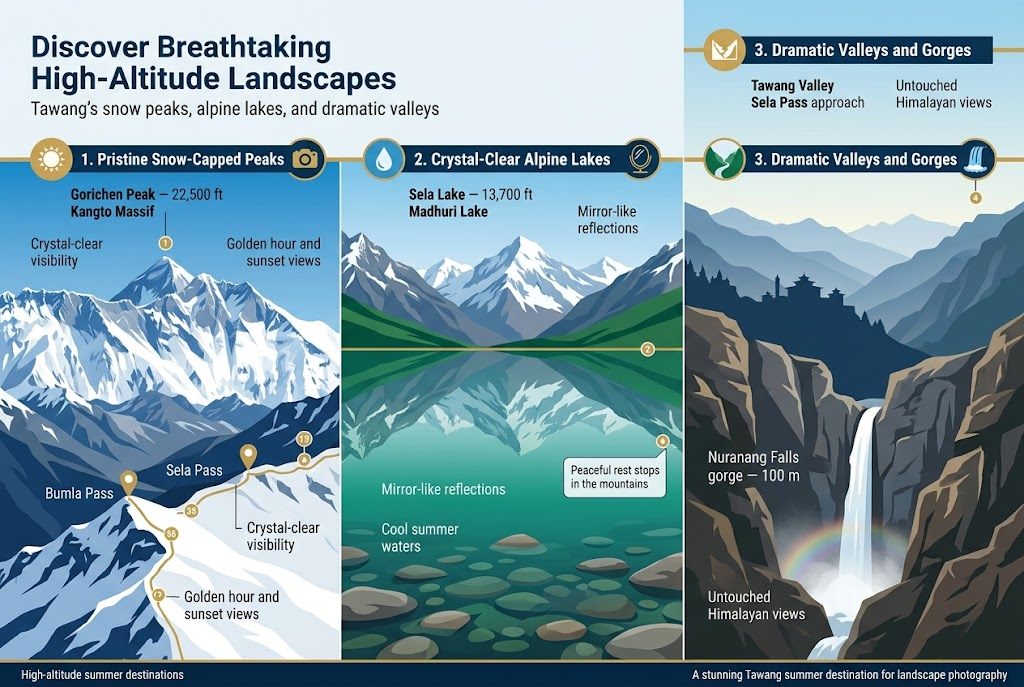
Pristine snow-capped peaks offering stunning photo opportunities
Tawang's towering peaks rise dramatically against azure skies, creating a photographer's paradise that rivals any Swiss alpine scene. The Gorichen Peak, standing majestically at 22,500 feet, dominates the horizon with its gleaming white crown, while the Kangto massif stretches endlessly across the landscape like nature's own cathedral. These high altitude summer destinations offer crystal-clear visibility during the warmer months, when the monsoon clouds haven't yet settled over the ranges.
What sets Tawang apart from other cool mountain getaway summer spots is the sheer accessibility to these viewpoints. You don't need expensive helicopter rides or grueling multi-day treks to capture frame-worthy shots. The town itself sits at 10,000 feet, placing you right in the heart of this mountain amphitheater. Early morning golden hour paints these peaks in warm amber light, while sunset transforms them into fiery silhouettes.
Local vantage points like Bumla Pass and Sela Pass provide unobstructed panoramas where photographers can capture the entire Himalayan range stretching into Bhutan and Tibet. The contrast between the permanent snow cover and the emerald valleys below creates depth and drama that transforms ordinary vacation photos into gallery-worthy masterpieces.
Crystal-clear alpine lakes reflecting mountain vistas
Hidden within Tawang's rugged terrain lie pristine alpine lakes that mirror the surrounding peaks with mirror-like precision. Sela Lake, perched at 13,700 feet, remains one of the most accessible yet breathtaking water bodies in the region. During summer months, when the harsh winter ice melts away, these lakes reveal their true beauty – crystal-clear waters so pure you can see smooth stones resting on the lake bed twenty feet below.
Madhuri Lake, named after Bollywood actress Madhuri Dixit following a film shoot, captivates visitors with its emerald-green waters that perfectly reflect the snow-capped peaks surrounding it. The lake's surface acts like nature's own mirror, doubling the visual impact of the already stunning mountain backdrop. On calm days, the reflection is so perfect that photographers often struggle to determine where reality ends and the mirror image begins.
These alpine lakes serve as natural rest stops during exploration, offering peaceful spots for contemplation while surrounded by some of India's most dramatic scenery. The high altitude ensures these waters remain refreshingly cool even during summer, providing a welcome respite from any lingering warmth in the valleys below.
Dramatic valleys and gorges creating spectacular viewpoints
Tawang's landscape unfolds like a geological masterpiece carved by millions of years of glacial activity and tectonic forces. The Tawang Valley itself plunges thousands of feet from the surrounding ridges, creating a dramatic bowl-shaped depression that cradles the ancient monastery and town. From elevated viewpoints along the valley rim, visitors can appreciate the full scope of this natural amphitheater.
The Sela Pass approach reveals some of the most spectacular gorge systems in the Eastern Himalayas. Deep ravines cut through the landscape like giant scars, their rocky walls rising vertically for hundreds of meters. These natural formations create multiple viewing angles and perspectives that change dramatically throughout the day as shadows shift across the canyon walls.
What makes these viewpoints particularly special for this offbeat hill stations India destination is their untouched character. Unlike more developed mountain regions, Tawang's valleys remain largely pristine, without the visual pollution of excessive development or crowds. The Nuranang Falls gorge exemplifies this raw beauty, where water cascades down 100 meters through a narrow rocky channel, creating rainbows in the mist while framing distant peaks through the canyon opening.
These dramatic landscapes provide natural viewing platforms where visitors can truly grasp the immense scale and power of the Himalayan range, making Tawang an unparalleled Tawang summer destination for landscape enthusiasts.
Experience Rich Tibetan Buddhist Culture Away from Crowds
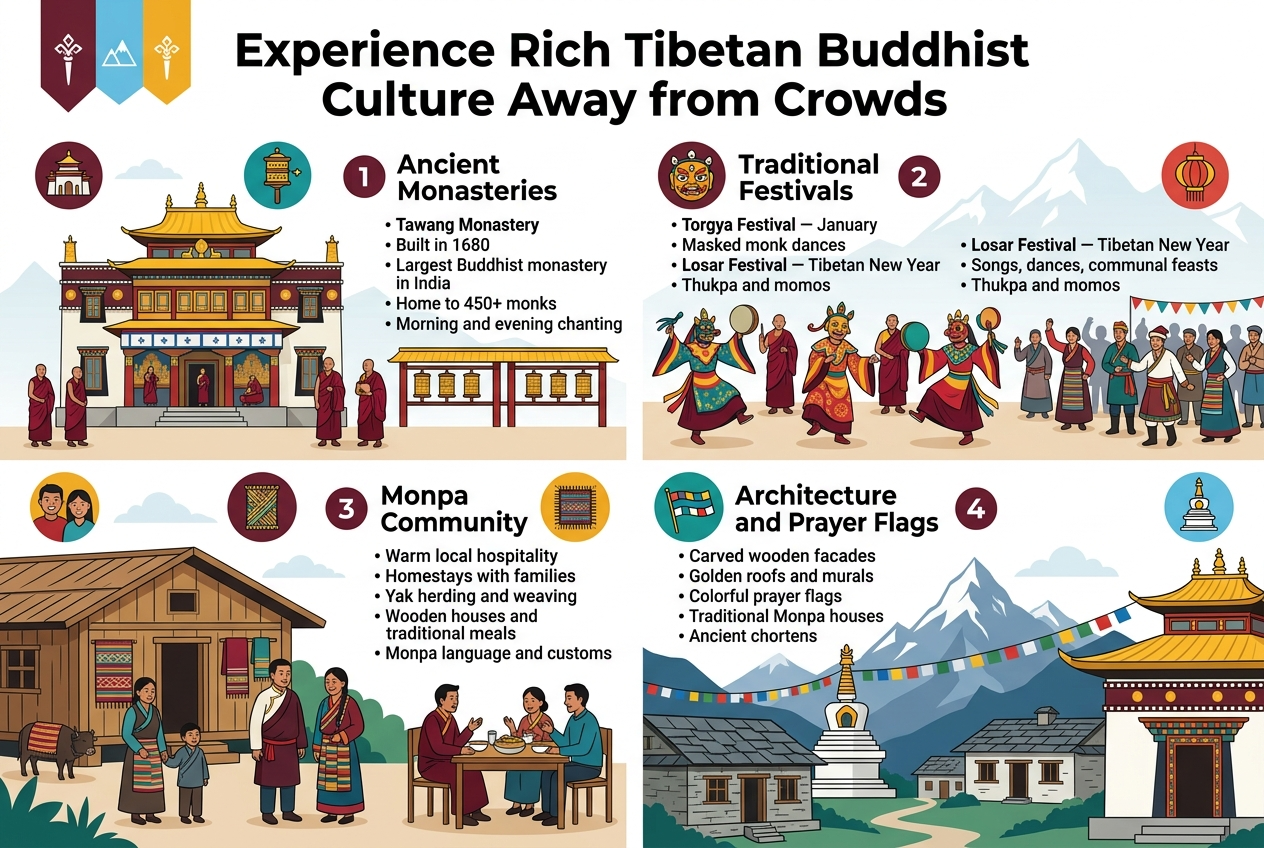
Visit ancient monasteries with authentic spiritual atmosphere
The crown jewel of Tawang's spiritual landscape is the magnificent Tawang Monastery, the largest Buddhist monastery in India and second largest in the world. Built in 1680, this three-story structure houses over 450 monks and offers visitors an incredible glimpse into centuries-old traditions. The monastery's prayer halls echo with deep chanting during morning and evening prayers, creating an atmosphere that transports you to another realm entirely.
What makes these sacred spaces truly special is their living, breathing nature. Unlike tourist-heavy religious sites elsewhere, Tawang's monasteries remain authentic centers of worship where monks continue their daily rituals undisturbed. The Ani Gompa nunnery provides another unique perspective, where Buddhist nuns dedicate their lives to spiritual practice in serene surroundings.
The gentle sound of spinning prayer wheels and the sight of maroon-robed monks going about their daily routines creates an incredibly peaceful environment. Visitors can participate in meditation sessions or simply sit quietly in the prayer halls, absorbing the tranquil energy that permeates these ancient walls.
Witness traditional festivals and religious ceremonies
Tawang's Buddhist festivals offer extraordinary cultural experiences rarely seen elsewhere in India. The Torgya Festival, celebrated in January, features elaborate masked dances performed by monks to ward off evil spirits for the coming year. The colorful costumes, haunting music, and symbolic movements create a mesmerizing spectacle that connects you directly to Tibetan Buddhist traditions.
The Losar Festival marks the Tibetan New Year with three days of celebrations including traditional songs, dances, and communal feasts. During these festivals, the entire community comes together, sharing traditional foods like thukpa and momos while dressed in their finest traditional attire. The festivals provide perfect opportunities to photograph stunning cultural displays without the overwhelming crowds found at more commercialized destinations.
Interact with friendly local Monpa community
The Monpa people of Tawang welcome visitors with genuine warmth and curiosity. Their traditional way of life revolves around Buddhism, yak herding, and weaving beautiful textiles. Many families still live in traditional wooden houses and practice age-old crafts passed down through generations.
Local homestays offer incredible opportunities to experience Monpa hospitality firsthand. Families share their daily routines, traditional meals, and stories about their ancestors. The Monpa language, customs, and traditional dress reflect their unique cultural identity that blends Tibetan and local influences. Many locals speak excellent Hindi and English, making meaningful conversations easily possible.
Explore unique architectural marvels and prayer flags
Tawang's Buddhist architecture showcases distinctive Tibetan design elements rarely found elsewhere in India. The monasteries feature intricately carved wooden facades, golden roofs, and colorful murals depicting Buddhist teachings. Prayer flags flutter from every rooftop, pole, and mountain pass, creating a rainbow of colors against the dramatic mountain backdrop.
The traditional Monpa houses display remarkable craftsmanship with their wooden construction and slate roofs designed to withstand harsh mountain weather. Ancient chortens (stupas) dot the landscape, each telling stories of devoted pilgrims and spiritual masters. These architectural treasures remain beautifully preserved due to the region's isolation from heavy tourism, offering authentic glimpses into Tibetan Buddhist artistic traditions.
Enjoy Adventure Activities in Untouched Natural Settings
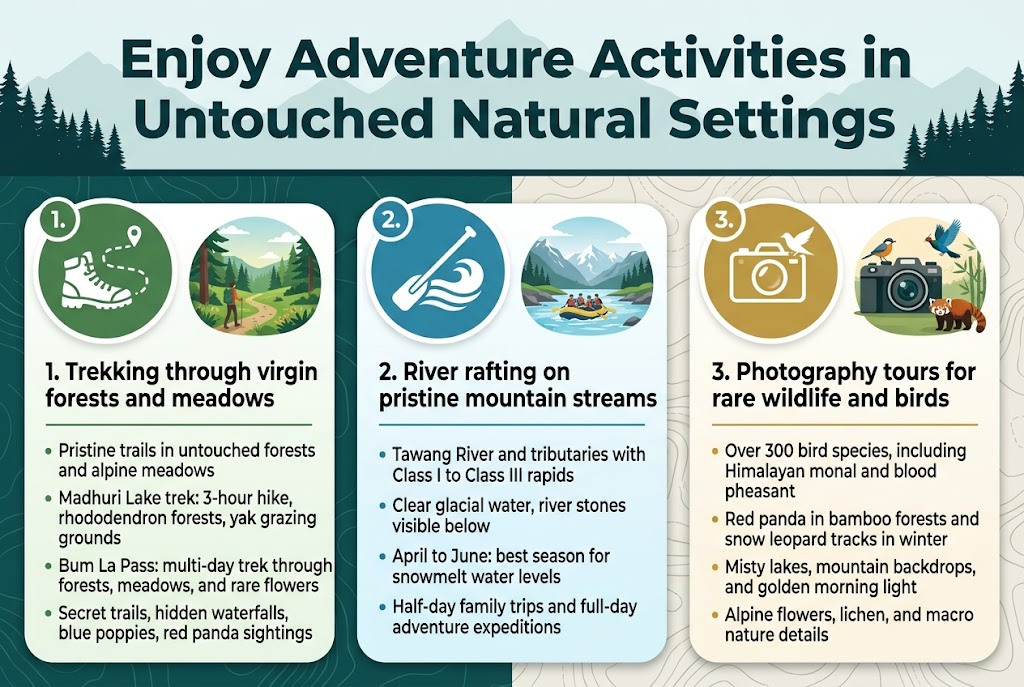
Trekking trails through virgin forests and meadows
Tawang offers some of the most spectacular trekking experiences in the Himalayas, with trails that wind through untouched forests and alpine meadows where your footprints might be the first human marks in weeks. The region's remote location means these paths remain pristine, far from the beaten tourist tracks that characterize popular destinations.
The trek to Madhuri Lake stands out as a crown jewel among Tawang adventure activities. This emerald-green glacial lake, surrounded by snow-capped peaks, requires a moderate 3-hour hike through rhododendron forests and yak grazing grounds. The trail rewards trekkers with panoramic views of the Eastern Himalayas and complete solitude that's impossible to find in crowded hill stations.
For experienced hikers, the multi-day trek to Bum La Pass pushes through diverse ecosystems - from subtropical forests at lower elevations to alpine meadows carpeted with rare Himalayan flowers. These high altitude summer destinations provide the perfect escape from scorching plains while offering challenging terrain for adventure seekers.
Local guides from nearby villages know secret trails that lead to hidden waterfalls and viewpoints unmarked on any map. These paths meander through pristine forests where blue poppies bloom and red pandas occasionally make appearances among the bamboo groves.
River rafting on pristine mountain streams
The crystal-clear mountain streams around Tawang create perfect conditions for white-water rafting adventures that feel worlds away from commercialized rafting operations elsewhere. The Tawang River and its tributaries offer rapids ranging from gentle Class I flows perfect for beginners to more challenging Class III sections that will get your adrenaline pumping.
What makes river rafting here special is the untouched nature of these waterways. The streams flow directly from glacial sources, creating ice-cold water so clear you can see colorful river stones on the bottom even in deeper sections. The surrounding landscape changes dramatically as you navigate downstream - towering conifers give way to alpine meadows, then to traditional Monpa villages where locals wave from ancient bridges.
Safety remains paramount, and local operators provide proper equipment and experienced guides who know every bend and rapid. The best rafting season runs from April to June, when snowmelt creates optimal water levels without the monsoon's unpredictable torrents.
Short half-day trips work perfectly for families, while full-day expeditions allow rafters to reach remote stretches where golden eagles soar overhead and the only sounds are rushing water and mountain winds through the valleys.
Photography tours capturing rare wildlife and birds
Tawang's unique ecosystem hosts an incredible array of wildlife that remains largely undocumented, making it a photographer's paradise for capturing images that few cameras have ever recorded. The region sits at the confluence of multiple biogeographical zones, creating biodiversity hotspots where rare species thrive in relative obscurity.
Bird photography opportunities here are extraordinary - over 300 species call this region home, including the magnificent Himalayan monal, blood pheasant, and various high-altitude raptors. Early morning sessions near Sangetsar Lake often yield shots of migrating waterfowl against misty mountain backdrops that look straight out of a nature documentary.
The elusive red panda represents the holy grail for wildlife photographers visiting Tawang. These endangered creatures inhabit the bamboo forests around higher elevations, and patient photographers with local knowledge sometimes capture glimpses of their rust-colored fur against emerald vegetation. Snow leopards, though extremely rare, leave tracks in winter snow that experienced guides can identify and follow.
Professional photography tours led by local naturalists provide insider access to wildlife corridors and seasonal gathering spots unknown to casual visitors. These guides understand animal behavior patterns and can position photographers for optimal lighting and compositions while maintaining respectful distances that don't disturb the wildlife.
Macro photography enthusiasts will find endless subjects among the region's unique flora - from delicate alpine flowers to unusual lichen formations on ancient tree bark that create abstract patterns perfect for artistic interpretation.
Benefit from Peaceful Environment for Mental Rejuvenation
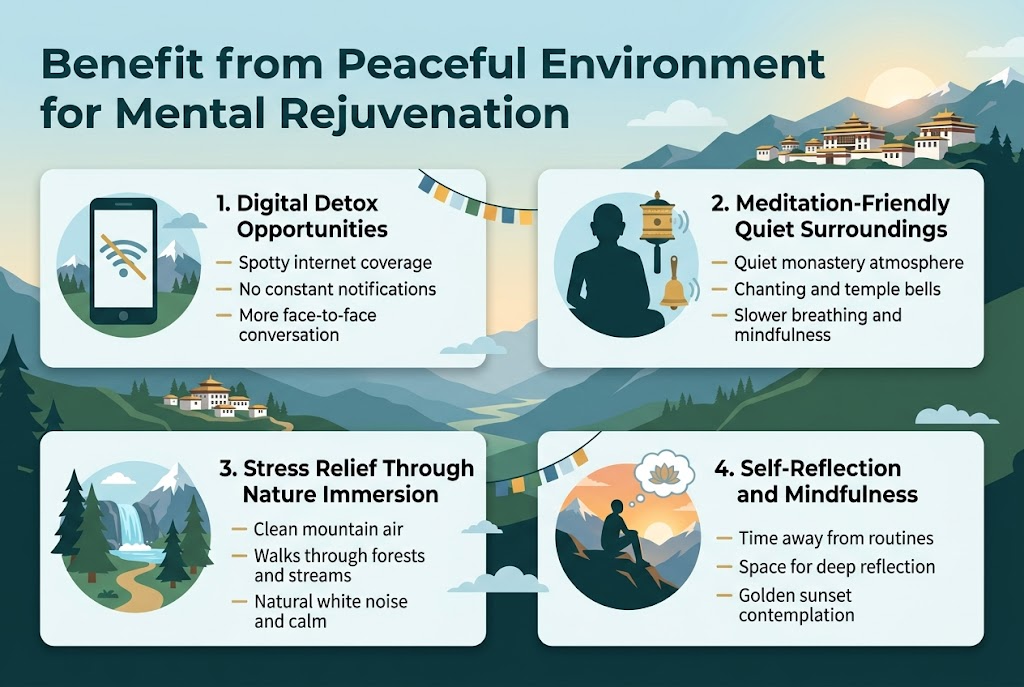
Digital Detox Opportunities with Limited Connectivity
Tawang offers a natural escape from our hyper-connected world, where spotty internet coverage becomes your greatest ally. The remote location means cell towers are sparse, and WiFi connections are often unreliable or completely absent in many areas. This isn't a drawback – it's a feature that transforms your vacation into a genuine digital detox experience.
Without constant notifications buzzing in your pocket, you'll rediscover what it feels like to be truly present. The absence of social media scrolling means more time observing the prayer flags fluttering against mountain peaks. Your eyes will naturally drift from screens to sweeping valleys and ancient monasteries dotting the landscape.
Local guesthouses and homestays often have minimal internet access, encouraging guests to engage in face-to-face conversations with fellow travelers and Monpa community members. Evening hours become opportunities for storytelling, traditional games, or simply sitting under star-filled skies that aren't competing with screen light.
Meditation-Friendly Quiet Surroundings
The serene atmosphere of this peaceful mountain retreat creates perfect conditions for meditation and mindfulness practices. Tawang Monastery, one of the largest Buddhist monasteries in India, emanates tranquil energy that permeates the entire region. The rhythmic chanting of monks during prayer sessions provides natural ambient sounds that enhance meditative states.
Early mornings bring complete silence broken only by distant temple bells and the gentle rustle of wind through rhododendron forests. These quiet moments allow deep introspection without urban distractions. Many visitors find themselves naturally adopting slower, more mindful rhythms that match the pace of monastery life.
The high-altitude environment also contributes to the meditative quality. Thinner air encourages slower, deeper breathing – a fundamental aspect of meditation practice. Traditional meditation spots near mountain lakes or overlooking valleys provide natural focal points for contemplative practices.
Stress Relief Through Nature Immersion
Tawang's pristine natural environment serves as nature's therapy session. Dense alpine forests filled with blue poppies, magnolias, and ancient oak trees create a living sanctuary that naturally reduces cortisol levels. The clean mountain air, free from pollution and urban toxins, helps clear both lungs and mind.
Gentle hiking trails through bamboo groves and across mountain streams offer active meditation opportunities. The physical movement combined with natural beauty triggers endorphin release while the rhythmic pace of walking becomes almost hypnotic. Many visitors report feeling immediate stress relief after just hours in these untouched landscapes.
The sound of rushing waterfalls and mountain streams provides natural white noise that drowns out mental chatter. These natural soundscapes have been scientifically proven to lower blood pressure and reduce anxiety levels. The visual feast of snow-capped peaks and emerald valleys creates a sense of perspective that makes daily worries seem insignificant.
Quality Time for Self-Reflection and Mindfulness
Away from familiar routines and constant stimulation, Tawang creates space for deep self-reflection. The dramatic change of environment naturally shifts mental patterns, allowing suppressed thoughts and feelings to surface in a safe, beautiful setting. Long walks along mountain ridges provide uninterrupted time for processing life experiences and gaining clarity on personal goals.
The Buddhist influence throughout the region encourages mindful living practices. Observing local Monpa people going about their daily lives with intentionality and presence offers valuable lessons in mindfulness. Their connection to nature and spiritual practices demonstrates alternative approaches to modern living that prioritize inner peace over external achievements.
Evening hours spent watching sunsets paint the Himalayas in golden hues become natural contemplation periods. Without television, late-night work emails, or social obligations, you'll have genuine quality time with your thoughts and emotions – a rare luxury in our fast-paced world.
Access Affordable Accommodation and Local Experiences
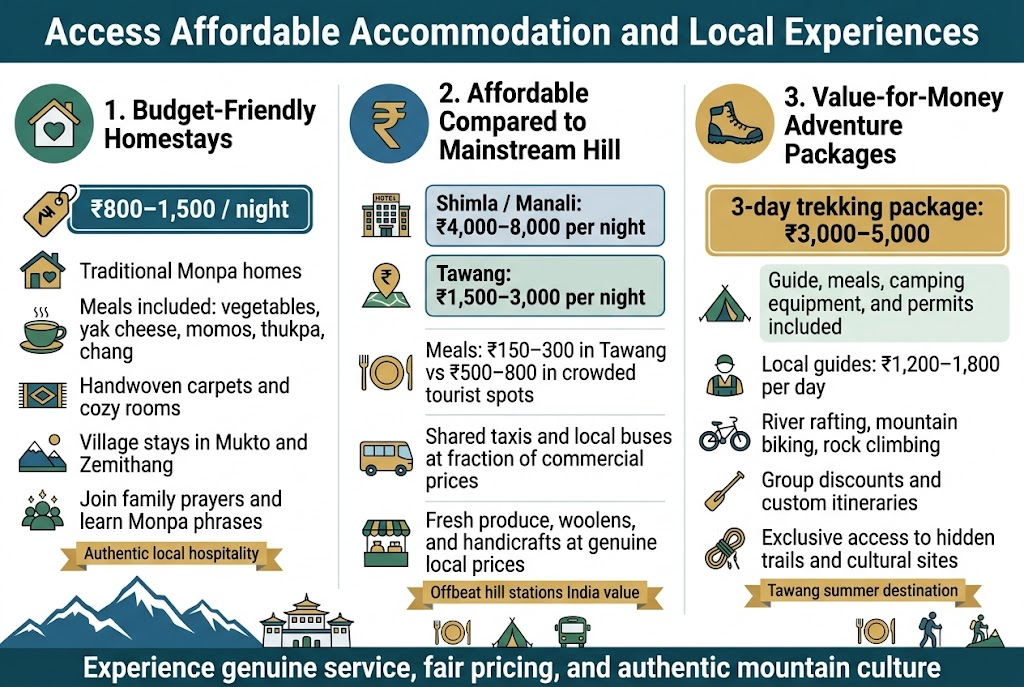
Budget-friendly homestays with authentic local hospitality
Tawang offers an incredible opportunity to stay in traditional Monpa homes where families welcome travelers like old friends. These homestays typically cost between ₹800-1,500 per night, including hearty meals prepared with locally grown vegetables and yak cheese. You'll sleep in cozy rooms with handwoven carpets and wake up to stunning mountain views that five-star hotels charge thousands for.
The hosts often share stories about their Buddhist traditions over butter tea, teach you basic Monpa phrases, and sometimes invite you to join family prayers. Many homestays are located in small villages like Mukto and Zemithang, where you can participate in daily activities like herding yaks or harvesting barley. This affordable mountain vacation experience connects you directly with local culture in ways that expensive resorts simply can't match.
Popular homestay clusters near Tawang monastery offer clean accommodations with attached bathrooms and home-cooked meals featuring momos, thukpa, and locally brewed chang. The warmth of Monpa hospitality makes every rupee spent feel like exceptional value.
Reasonable pricing compared to mainstream hill stations
While destinations like Shimla and Manali can drain your wallet during peak summer months, Tawang remains refreshingly affordable. Hotel rates that would cost ₹4,000-8,000 per night in popular hill stations are available for ₹1,500-3,000 in Tawang. Even mid-range accommodations with mountain views and modern amenities stay within budget-conscious travelers' reach.
Local restaurants serve filling meals for ₹150-300, compared to ₹500-800 in crowded tourist spots. Transportation costs are also reasonable, with shared taxis and local buses connecting major attractions at fraction of prices found in commercialized destinations.
The offbeat hill stations India advantage means you're not paying inflated tourist prices for basic services. Local markets sell fresh produce, woolen clothing, and handicrafts at genuine prices without the markup common in mainstream destinations.
Value-for-money adventure packages and guided tours
Adventure operators in Tawang offer comprehensive packages that would cost double elsewhere. A three-day trekking package including guide, meals, camping equipment, and permits typically costs ₹3,000-5,000 per person. Compare this to similar offerings in popular Tawang summer destination spots where prices easily exceed ₹8,000-12,000.
Local guides charge reasonable rates of ₹1,200-1,800 per day and bring invaluable knowledge about hidden trails, wildlife spotting locations, and cultural sites. Many speak multiple languages and have deep connections with monastery monks who provide exclusive access to restricted areas.
River rafting, mountain biking, and rock climbing packages include professional equipment and safety gear without premium pricing. Group discounts are readily available, and operators often customize itineraries based on your interests and budget constraints. The lack of commercial tourism pressure means genuine service and fair pricing remain standard practice.
Take Advantage of Fewer Tourist Crowds This Season
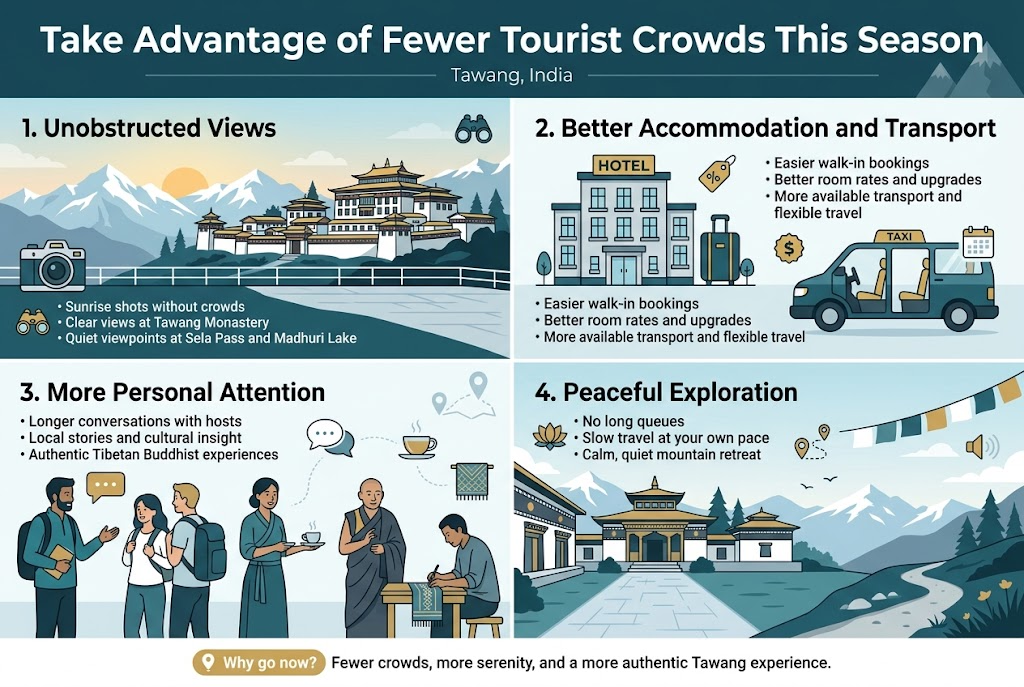
Unobstructed Views at Popular Attractions and Monasteries
The magic of Tawang truly comes alive when you have the entire Tawang Monastery almost to yourself. During this offbeat season, you can capture that perfect sunrise shot over the monastery without crowds blocking your view or other tourists photobombing your frame. The iconic 400-year-old structure stands majestically against the backdrop of snow-capped peaks, and you'll have prime spots all to yourself for photography and contemplation.
Popular viewpoints like Sela Pass and Madhuri Lake offer panoramic vistas without the usual hustle of tour groups. You can spend quality time absorbing the raw beauty of these high-altitude landscapes, take multiple shots from different angles, and enjoy the serene atmosphere that makes Tawang such a special cool mountain getaway summer destination.
Better Availability of Accommodation and Transport
Summer brings excellent opportunities for spontaneous travel to this uncrowded summer destinations. Hotels and guesthouses that are typically booked months in advance now welcome walk-in guests with open arms. You'll find better room rates, upgrade opportunities, and flexible check-in times that aren't possible during peak tourist seasons.
Local transport becomes significantly more accessible too. Shared taxis to nearby attractions run more frequently, and you won't face the usual scramble for seats. Private vehicle bookings are easier to arrange, often at negotiated rates that work better for your budget. This improved accessibility makes Tawang an ideal choice among affordable mountain vacation options.
More Personalized Attention from Local Guides and Hosts
Local guides have more time to share detailed stories about Tibetan Buddhist traditions, local legends, and hidden gems that usually get overlooked during busy periods. Your guesthouse hosts can sit down for longer conversations about local culture, recommend authentic local eateries, and even invite you to join family meals or local festivities.
This personal touch transforms your trip from a standard tourist experience into genuine cultural immersion. Local artisans have time to demonstrate traditional crafts, monastery monks can engage in meaningful conversations about Buddhist philosophy, and you'll discover aspects of Tibetan Buddhist culture tourism that rushing crowds typically miss.
Peaceful Exploration Without Long Queues or Rush
The absence of tour bus crowds means you can explore at your own pace without feeling pressured to move quickly through attractions. Meditation sessions at monasteries become deeply meaningful experiences rather than rushed activities. Mountain trails offer solitude where you can actually hear the sounds of nature - prayer flags fluttering, birds chirping, and the gentle rustle of alpine vegetation.
This peaceful environment perfectly supports the peaceful mountain retreat experience that many travelers seek but rarely find in popular destinations. You can wake up naturally, plan your day spontaneously, and truly disconnect from the rushed pace of city life.
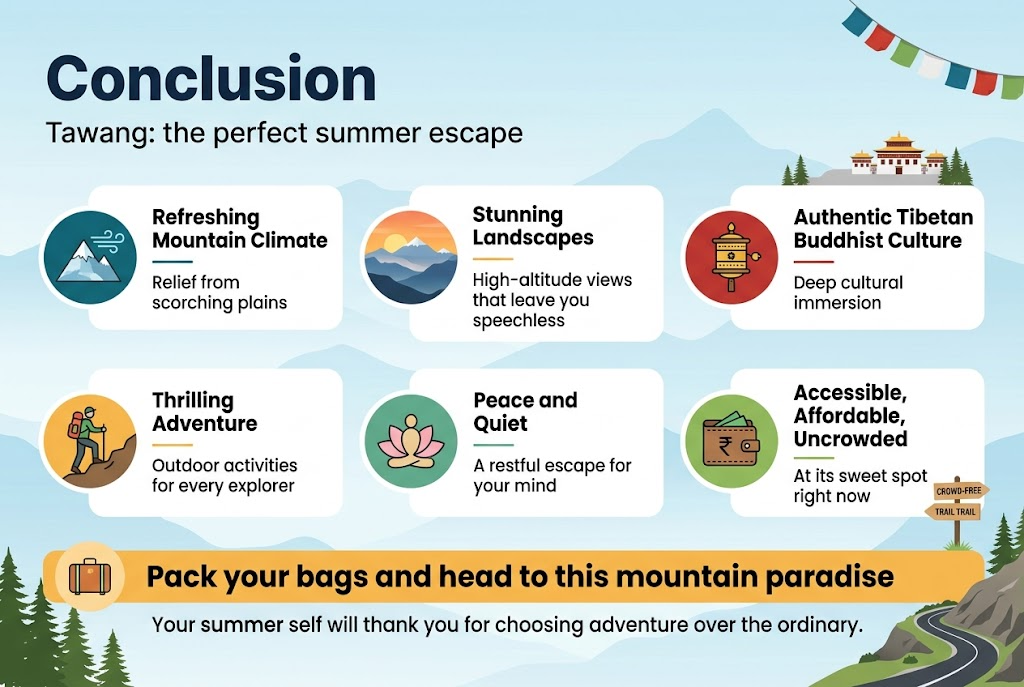
Tawang offers everything you need for an unforgettable summer escape. From its refreshing mountain climate that provides relief from scorching plains to the stunning high-altitude landscapes that will leave you speechless, this hidden gem checks all the boxes. You'll get to dive deep into authentic Tibetan Buddhist culture, push your limits with thrilling adventure activities, and find the peace your mind has been craving.
The best part? You won't have to break the bank or fight through massive crowds to experience all this magic. Right now, Tawang is at its sweet spot – accessible, affordable, and beautifully uncrowded. Pack your bags and head to this mountain paradise before everyone else catches on. Your summer self will thank you for choosing adventure over the ordinary.
Post a Comment